
Usages
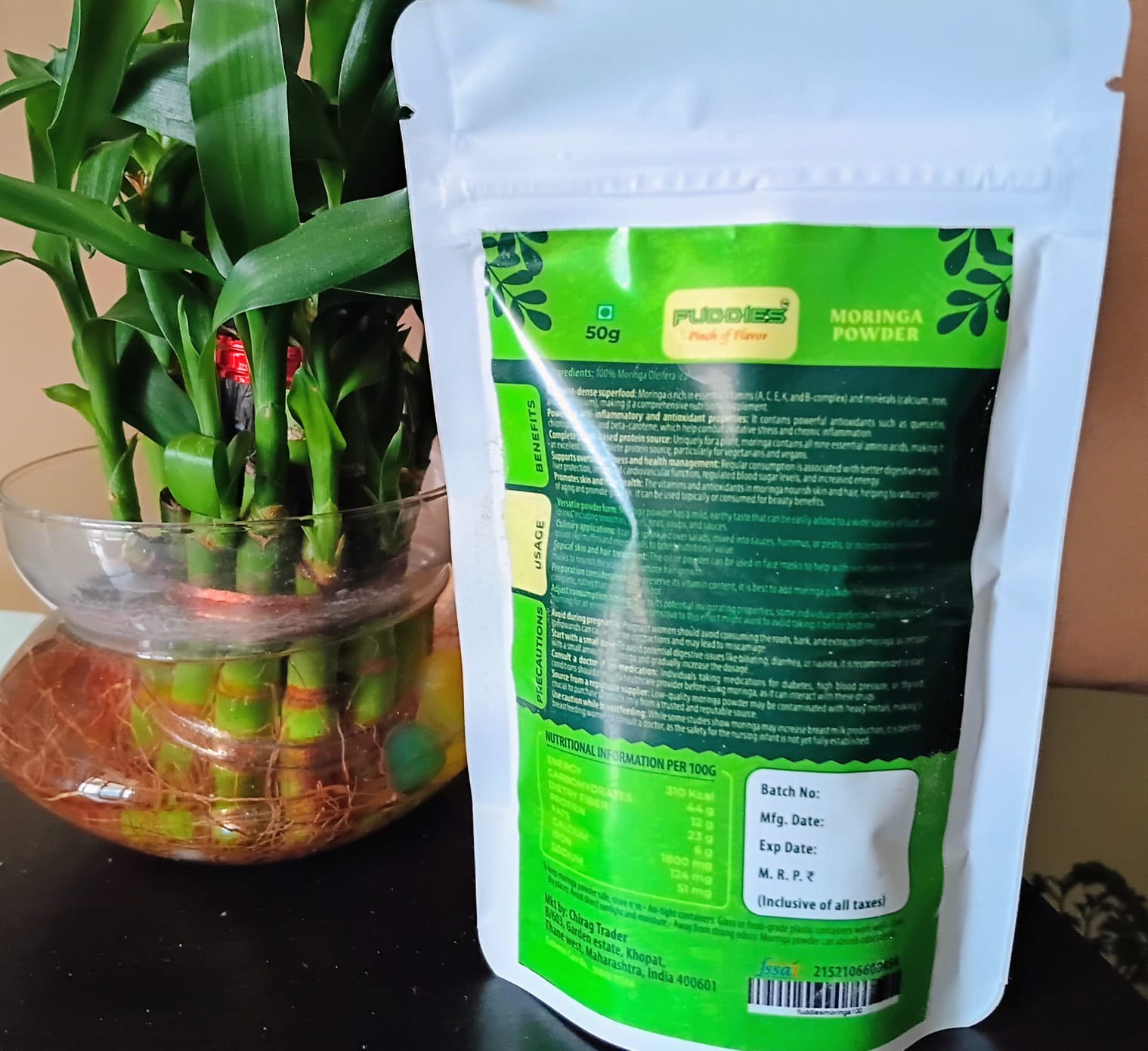
1. Versatile powder form: Moringa powder has a mild, earthy taste that can be easily added to a wide variety of foods and drinks, including smoothies, juices, teas, soups, and sauces.
2. Culinary applications: It can be sprinkled over salads, mixed into sauces, hummus, or pesto, or incorporated into baked goods like muffins and energy balls to boost nutritional value.
3. Topical skin and hair treatment: The oil or powder can be used in face masks to help with skin blemishes or in hair masks to nourish the scalp and promote hair growth.
4. Preparation considerations: To preserve its vitamin content, it is best to add moringa powder to food after cooking is complete, rather than while it is still hot.
5. Adjust consumption timing: Due to its potential invigorating properties, some individuals prefer taking moringa in the morning for an energy boost. Those sensitive to this effect might want to avoid taking it before bedtime.
Precautions
1. Avoid during pregnancy: Pregnant women should avoid consuming the roots, bark, and extracts of moringa, as certain compounds can cause uterine contractions and may lead to miscarriage.
2. Start with a small dose: To avoid potential digestive issues like bloating, diarrhea, or nausea, it is recommended to start with a small amount of moringa and gradually increase the dosage.
3. Consult a doctor if on medication: Individuals taking medications for diabetes, high blood pressure, or thyroid conditions should consult a healthcare provider before using moringa, as it can interact with these drugs.
4. Source from a reputable supplier: Low-quality moringa powder may be contaminated with heavy metals, making it crucial to purchase products only from a trusted and reputable source.
5. Use caution while breastfeeding: While some studies show moringa may increase breast milk production, it is best for breastfeeding women to consult a doctor, as the safety for the nursing infant is not yet fully established.

Reviews
There are no reviews yet.